
Review · AFTERNOON TEA EXPERIENCES
Visit the Oasis & Tea at the basket maker.
A family basket maker, a spring-fed oasis, and tea shared in a Moroccan home give this outing more character than a standard countryside drive. You walk through Ain el Hajar, passing argan and olive trees, small gardens, the mausoleum of Sidi Bourahmoune, and a viewpoint above the spring.
I like the personal scale and the chance to see rush weaving as a working family craft rather than a staged shop display. I also like the mix of nature, farming, local religious life, and tea, with private transport included for $47.12 per person.
The main consideration is that the route may change if too few people book. One confirmed outing became an argan-forest walk with guide Naima, so you should be comfortable with a little flexibility. The walk also suits people who can manage uneven outdoor ground.
Key points to know before booking
- A spring feeds Ain el Hajar: The oasis supports trees, gardens, irrigation, and farming across the area.
- The walk starts beside a remarkable argan tree: It is described as possibly the biggest in the region.
- Sidi Bourahmoune’s mausoleum adds local meaning: This is more than a nature stroll, with a stop at a saint’s tomb.
- Rush weaving is part of a family trade: You can watch a basket maker work and share traditional tea.
- Private transport is included: The tour starts and ends at the medical analysis laboratory on Rue Oued El Makhazine in Essaouira.
- The group is capped at 12 people: That keeps the outing smaller than a typical coach excursion.
From Essaouira to the spring-fed Ain el Hajar oasis
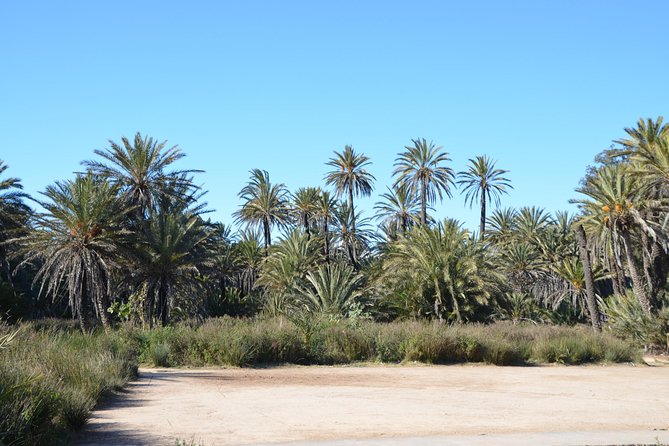
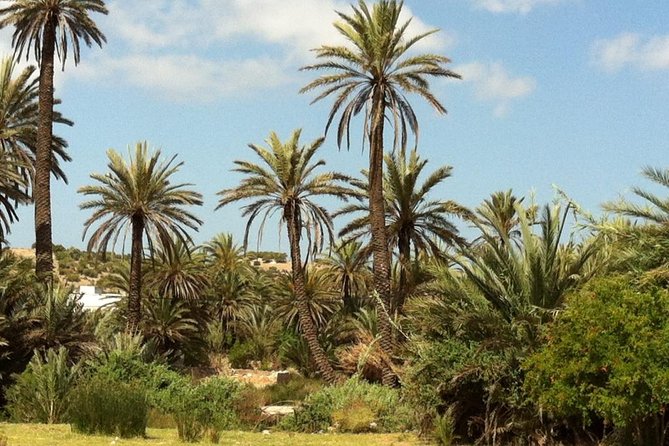
Essaouira is known for its coastal air and whitewashed streets, but the countryside nearby offers a very different view of the region. Ain el Hajar is built around a spring that supplies water to the surrounding area. That water shapes everything you see: the trees, the garden plots, the irrigation channels, and the working farms.
The setting is not a polished public garden. It is a lived-in agricultural area, where old water systems and newer market gardening sit beside olive groves and woodland. I like this kind of outing because the countryside is not treated as a backdrop. You see why the oasis exists and how people use it.
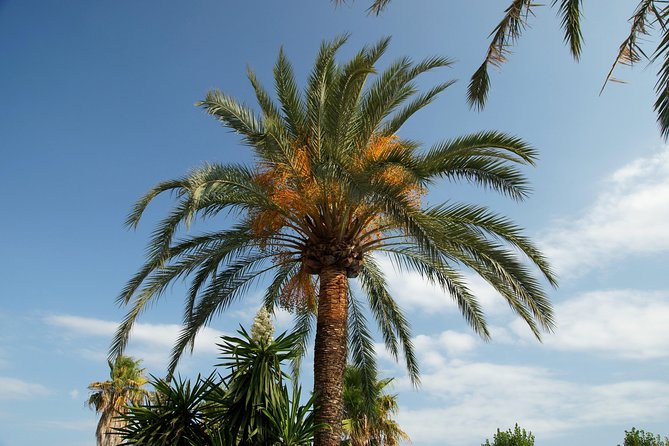
The oasis once had more palm trees. Over time, olive trees became more common, and irrigation was introduced to support market gardening. That change gives the walk a useful lesson in local agriculture without turning the morning into a formal lecture. You can see how water makes cultivation possible in an otherwise dry part of Morocco.
The experience lasts about four hours in total, with the main stop listed at roughly two hours. That suggests you should expect a relaxed half-day outing, not a full-day expedition. The exact pace and route may depend on conditions, group size, and the guide.
More Afternoon Tea in Morocco:
- Argan Forest, tea time at a Berbers family & Visit of an Argan cooperative.
★ 5.0 · 21 reviews - London: Afternoon Tea Cruise on the River Thames
★ 4.4 · 3,274 reviews - Afternoon Tea Bus Tour in Dublin
★ 5.0 · 2,791 reviews
Starting beside the region’s large argan tree
The walk begins at an argan tree described as possibly the biggest in the region. Even without a formal measurement, this is a fitting starting point. Argan trees are closely linked with southwestern Morocco, and seeing one in its countryside setting gives you a better sense of the tree than simply buying argan oil in town.
From there, you walk across fields and gardens toward the religious site. The description does not give a detailed route surface or difficulty rating, so I would wear sturdy shoes and expect ordinary rural ground rather than a paved promenade. If you prefer a completely flat and carefully surfaced walk, ask the provider about current conditions before booking.
The route sounds best for someone who enjoys noticing small details. You might see the way irrigation reaches garden plots, how olive trees have taken the place of many palms, or how the oasis shifts from open fields to wooded areas. There is no promise of a large attraction at every turn, and that is part of the point. The interest comes from the working countryside.
One highly praised guide is Naima. On an outing that changed because of low numbers, she led an argan-forest walk, explained what the group was seeing, and answered questions with patience and warmth. Her role matters here because a rural walk can feel thin without context. A good guide helps you connect the trees, water, farming, and local customs.
Sidi Bourahmoune’s mausoleum and the view over the oasis
The walk continues to the mausoleum of Saint Sidi Bourahmoune. A visit to a local saint’s tomb adds a cultural layer that a simple nature walk would miss. The information provided does not specify the building’s architectural details or religious access rules, so treat it as a respectful stop rather than expecting a major monument.
You should dress and behave with ordinary respect around the mausoleum. The route is designed to pass through local places, not to turn them into tourist displays. Your guide can help explain what the site means and how to approach it appropriately.
After the mausoleum, the route reaches a vantage point with a view across the oasis to the spring. This is likely the clearest way to understand the whole area. From above, you can see the relationship between the water source, planted areas, trees, and fields.
I especially like the idea of seeing the spring from a viewpoint rather than simply being told about it. Water systems are easy to overlook when you are walking at ground level. A higher view helps you read the oasis as a connected place, where one source supports a wide area.
The views should be judged as rural and agricultural, not dramatic mountain scenery. If you want sweeping coastal vistas or major architectural sights, this is not the right half-day trip. If you like quiet countryside and the practical story of water, trees, and cultivation, the viewpoint should be one of the morning’s most useful stops.
A possible glimpse of stonework for olive oil mills
Along the way, you might come across a stone mason carving stones used as millstones for olive oil extraction. This is not guaranteed, so consider it an extra possibility rather than a promised performance. If the mason is working, you could see a traditional craft tied directly to local olive production.
That connection is valuable. Olive trees are not just part of the scenery here. They are part of the local economy, and the stones used to process the fruit show how agriculture, tools, and craftsmanship fit together.
The activity does not promise a formal demonstration or a chance to try carving. Still, the possibility gives the route some texture. You may see the finished products in shops, but watching a craftsperson shape the stone gives you a better sense of the labor behind them.
This is also a good example of why you should keep your expectations flexible. Rural visits depend on who is working that day and what is happening at the time of your arrival. The guide can point out what is available without forcing the area into a fixed schedule.
More tea experiences around Morocco if you are still choosing
- Marrakech: Moroccan Pastries and Tea Class with a Local
★ 4.7 · 84 reviews - Lamsaty Pottery Workshop with Moroccan Tea
★ 5.0 · 75 reviews - Tangier: sunset, tea, camel ride, Cape Spartel and caves.
★ 4.3 · 58 reviews - Agafay Desert, 2H of Quad Biking, tea & transfer from Marrakech
★ 5.0 · 55 reviews
Meeting the basket maker and sharing Moroccan tea
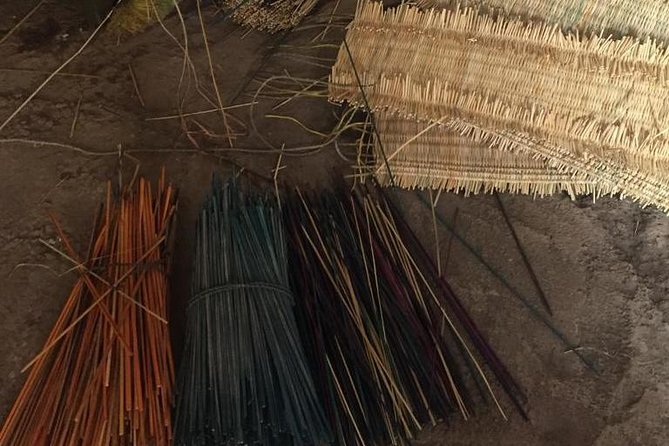
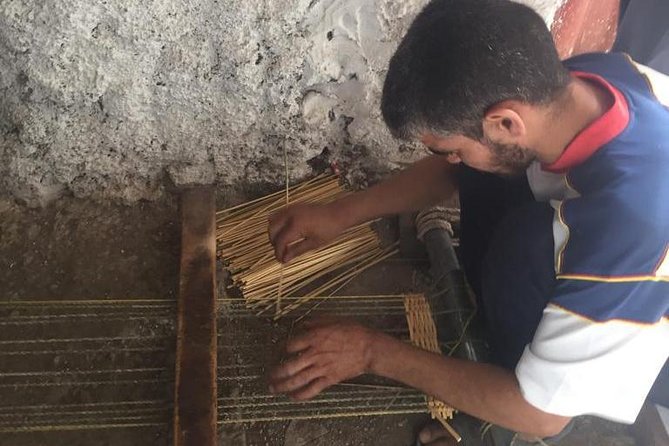
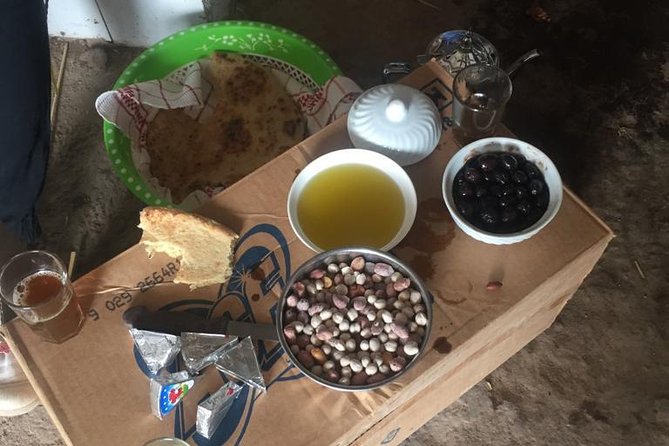
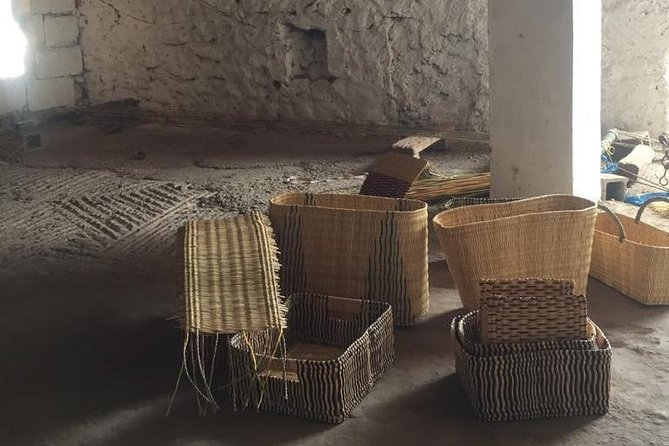
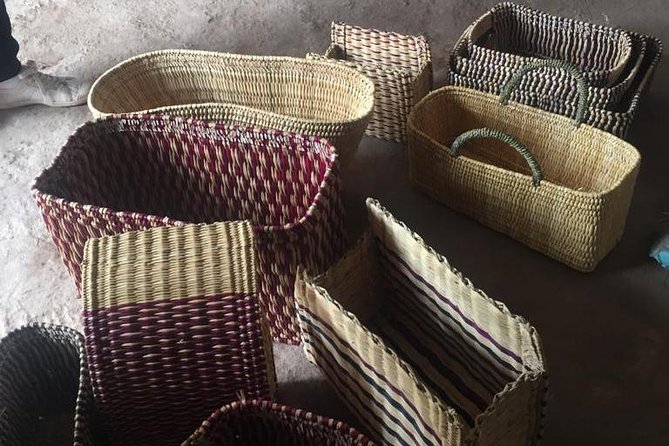
The final part of the morning takes you to a basket maker who works with rush. This is a family business, and the visit includes traditional tea served there. For many people, this will be the most memorable part of the experience because it combines a practical craft with ordinary Moroccan hospitality.
Rush weaving is a useful local skill, not just a decorative activity. Baskets and woven items come from plant material, patient handwork, and techniques passed through a family. Watching the maker weave helps you understand the time and effort behind objects that can look simple in a market.
The setting also matters. Tea served by the family makes the stop feel more personal than a quick purchase at a craft stall. You are being welcomed into a working household connected to the trade. The information does not say how long the tea visit lasts or whether shopping is expected, so you should not assume either. You can enjoy the visit for what it is: a chance to watch the work and share a traditional drink.
A previous outing included tea with a Berber family, which was described as a warm welcome. That detail points to the social side of the tour. Naima was also praised for explaining the visit and responding to questions, so ask her about the rush, the weaving process, and how the family business operates.
If you have allergies, dietary restrictions, or do not drink tea, the supplied details do not explain alternatives. You can ask the provider before departure. Bottled water is not included, so bring your own water for the walk.
What the $47.12 price includes
At $47.12 per person, the value depends mainly on how much you appreciate a small, local outing. The price includes private transportation and the tea stop, which removes the need to arrange your own rural transfer from Essaouira. It also gives you a guide-led route through several different parts of the oasis.
The price is easier to justify if you would otherwise need to hire a car or arrange a separate driver. You are not paying only for transport. The morning combines a countryside walk, local farming, a saint’s mausoleum, a viewpoint, the possible stone-mason stop, and a family craft visit.
Still, this is not a bargain attraction with a long list of admissions. There are no major museum tickets or elaborate meals included. The value comes from access and interpretation, especially if Naima or another guide helps you understand what you are seeing.
For a person who wants a quiet, human-scale outing, the cost is reasonable. For someone looking only for famous sights or a packed schedule, the same price may feel less convincing. I would compare it with the cost of arranging private transport and finding the basket maker independently, though the practical details of doing that are not provided.
Timing, meeting point, and group size
The start time is 9:00 a.m. You meet at Labo Abdelkrim Khatabi d’Analyses Médicales, 287 Rue Oued El Makhazine, Essaouira 44000. The activity ends back at the same meeting point, which is convenient because you do not need to arrange a separate return from the countryside.
Check the meeting point carefully before setting out. The name refers to a medical analysis laboratory, not a familiar tourist landmark. Arriving a little early is sensible, especially since the tour uses transport and leaves at a fixed time.
The group can include up to 12 people. That is small enough for questions and a more relaxed visit, though it is not necessarily a private outing for your own party. The description says private transportation, but the maximum group size means other participants may be included.
The experience is generally open to most people, and service animals are allowed. The information does not give a precise walking distance, elevation change, or surface description. Anyone with mobility concerns should ask the provider for current route details rather than relying only on the broad statement that most people can participate.
The activity is offered with a mobile ticket, and booking confirmation is provided at the time of booking. You can cancel for a full refund up to 24 hours before the local start time. Changes or cancellations inside that window are not refunded. Poor weather or failure to reach the minimum number of people can also cancel the outing, with a different date or a full refund offered.
The experience is booked an average of 26 days ahead, so I would not leave it until the last morning if it is important to your Essaouira plans. That lead time may also explain why a low-number departure can sometimes change into another argan-focused route.
Who will enjoy this countryside morning
I would choose this experience if you want to get outside Essaouira and see a working rural area without giving up the convenience of arranged transport. It suits people who enjoy walking, small craft businesses, local agriculture, and conversations with a guide.
It is particularly good for:
- Curious walkers: You get fields, gardens, trees, a spring, and a viewpoint rather than a vehicle-only tour.
- Culture-minded visitors: The mausoleum and family tea stop add local meaning to the countryside.
- Craft enthusiasts: The rush basket work, and possibly the stone mason, connect the outing to traditional skills.
- Repeat Morocco visitors: If you have already seen the main streets and souks, the oasis offers a different side of the area.
- Small groups and couples: The group limit of 12 keeps the outing from becoming a large coach visit.
I would hesitate if your priority is a strenuous hike, a major historical monument, or a guaranteed craft demonstration. The stone mason is only a possibility, the route can change if numbers are low, and the walk’s exact physical demands are not specified.
Should you book the Ain el Hajar outing?
Book it if the idea of a spring-fed oasis, argan and olive trees, a local mausoleum, rush weaving, and tea with a family appeals to you more than a list of famous sights. The strongest reason to go is the combination of small details: water feeding gardens, a possible olive millstone being carved, and a basket maker working within a family trade.
The best practical choice is to bring water, wear suitable walking shoes, and allow the morning to unfold at a rural pace. Ask about the current route if mobility is a concern, and accept that the outing may shift to an argan-forest walk when numbers are low.
At $47.12, this is a fair choice for a guided half-day with transport and a personal cultural stop. It is less suitable for anyone who wants a tightly scripted tour with guaranteed attractions at every stage. For a quiet look at the countryside around Essaouira, I would put it on your shortlist.
FAQ
How long does the experience last?
The total duration is approximately four hours. The Ain el Hajar stop is listed as taking about two hours, with the full morning also including transport and the basket maker visit.
What time and where does the tour start?
It starts at 9:00 a.m. at Labo Abdelkrim Khatabi d’Analyses Médicales, 287 Rue Oued El Makhazine, Essaouira 44000, Morocco.
Where does the tour finish?
The activity ends back at the same meeting point in Essaouira.
Is transportation included?
Yes. Private transportation is included, along with tea at the basket maker.
Is bottled water included?
No. Bottled water is not included, so you should bring your own.
What happens if the tour is canceled?
If poor weather causes a cancellation, you can be offered another date or a full refund. If the minimum number of participants is not reached, you can also be offered a different date or experience, or receive a full refund.
Fresh tea listings around Morocco
- Agadir/Taghazout: Sandboarding & Sunset Tea with Fire Show★ 5.0 · 6 reviews
- Walk to the cascade and marabout of Sidi Mbark & for a tea to Kaouki.★ 5.0 · 49 reviews
- Walk to the cascade and marabout of Sidi Mbark & for a tea to Kaouki★ 5.0 · 14 reviews
- Argan Forest, tea time at a Berbers family & Visit of an Argan cooperative.★ 5.0 · 21 reviews
- Agadir: Quad Bike Safari Desert With Moroccan Tea★ 4.4 · 23 reviews
- Agadir : 2 h Quad biking excursion with moroccan tea★ 4.7 · 26 reviews
- Moroccan Hands on traditional pastries & Tea class in Marrakech★ 4.5 · 33 reviews
- Agadir/Taghazout/Port: Camel Ride Tea & BBQ Option★ 4.3 · 39 reviews
Afternoon Tea Experiences, compared.

London: Afternoon Tea Cruise on the River Thames
Read our review →

London: Afternoon Tea Bus Tour – 1960s Routemaster Bus
Read our review →
London: Afternoon Tea Bus with a Glass of Prosecco
Read our review →



Browse the lists this tour appears in