
Review · MOROCCO TEA TOURS
Moroccan Hands on traditional pastries & Tea class in Marrakech
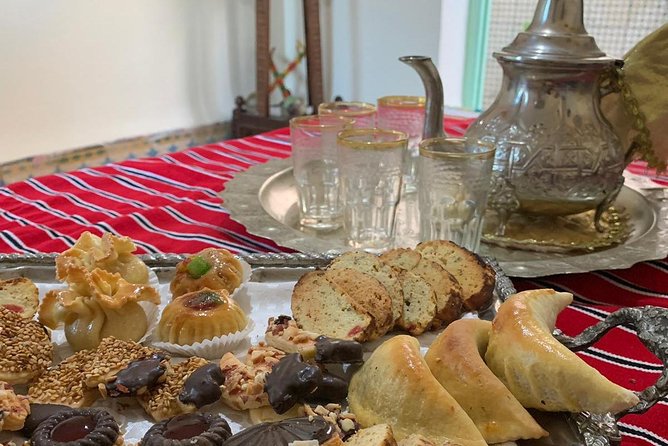
Moroccan pastry is best understood at a kitchen table, not from a glossy cookbook. This three-hour class brings you into a private home in the Marrakech medina, where you’ll share tea or coffee, learn family-style methods, and bake treats such as corne de gazelle and ghriba. The setting gives the class a personal feel that a large cooking school cannot match.
I like the small maximum of 10 people, which should leave room for questions and hands-on work. I also like the practical approach: the pastries use ordinary home equipment, and you leave with recipes plus a box of what you make.
The main thing to consider is the class level. The advertised focus is a small selection of traditional pastries, and some preparation may already be measured out. If you want a demanding pastry course with many recipes, this may feel too simple. Also take the meeting time seriously: one late arrival led to a missed class and a dispute over the scheduled hour.
Key points at a glance
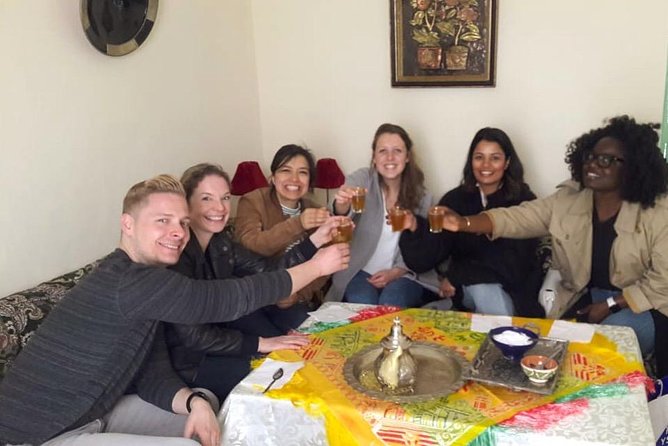
- A private medina home: You meet a local host and her family rather than attending a formal restaurant demonstration.
- Two named Moroccan pastries: Corne de gazelle and ghriba are among the pastries taught, with other varieties possible.
- Tea is part of the lesson: You learn how to prepare Moroccan mint tea, not just drink it.
- Warm food and a take-home box: The class ends with tasting your baking and taking pastries home.
- A three-hour, small-group format: The maximum is 10 people, with several time slots available.
- Good value for the right learner: At $40.65 per person, the price covers instruction, tea or coffee, pastries, recipes, and a personal setting.
A pastry lesson inside the Marrakech medina
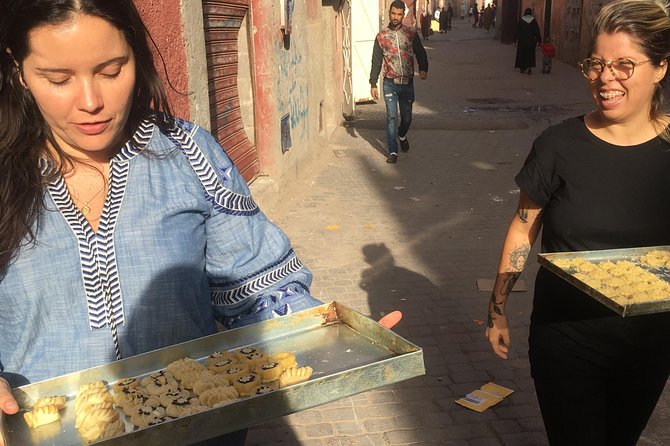
The appeal here is the setting. You begin at Rue Bab Doukkala in Marrakech, then enter a local home for a session built around the daily Moroccan habit of serving sweet pastries with tea or coffee.
That changes the tone from a standard cooking demonstration. You are not simply watching a chef work behind a counter. You are learning how these sweets fit into home life, hospitality, and conversation. At the end, there is time to chat about your trip and ask for food advice or local recommendations.
The class is run by Marrakech Cooking Class With Chef Khmisa. The supplied information identifies the provider, but it does not give the individual name of the host who teaches each session. You should therefore book it as a host-led home experience rather than expect a particular chef by name unless the operator confirms that directly.
The meeting point is near public transportation, but hotel pickup is not included. Plan your route to Rue Bab Doukkala before the class, especially if you are staying outside the medina. The activity returns to the same meeting point, so it is easy to build into a morning or afternoon plan once you know how to get there.
More tea experiences around Morocco if you are still choosing
- Marrakech: Moroccan Pastries and Tea Class with a Local
★ 4.7 · 84 reviews - Lamsaty Pottery Workshop with Moroccan Tea
★ 5.0 · 75 reviews - Tangier: sunset, tea, camel ride, Cape Spartel and caves.
★ 4.3 · 58 reviews
What happens during the three-hour class
The class begins with a welcome and Moroccan tea or coffee. This is more than a quick drink before the cooking starts. Tea is part of the lesson, and you learn how Moroccan mint tea is made and served.
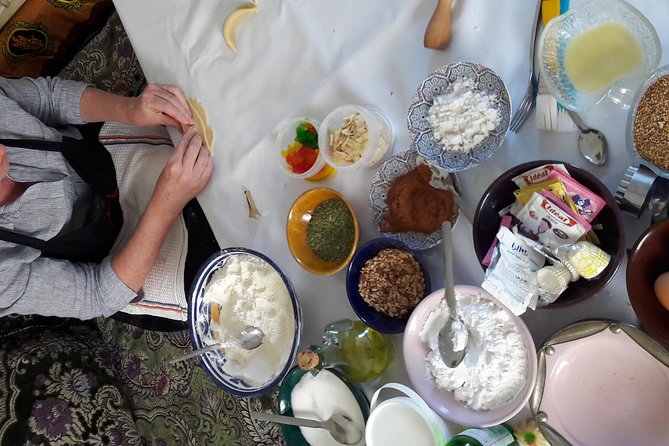
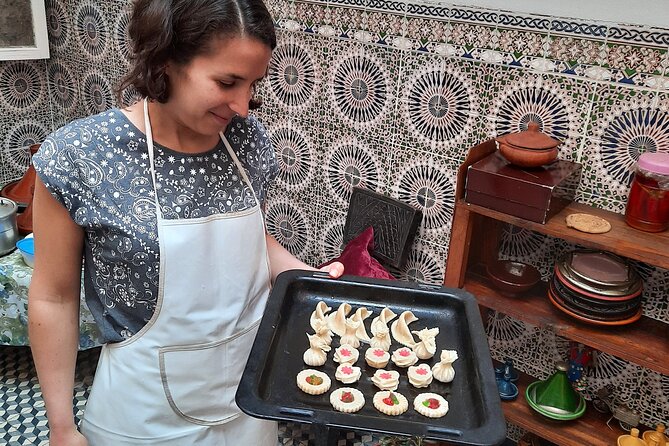
The pastry work follows. You learn the basic methods behind Moroccan pâtisserie, including the precise handling of dough, fillings, shaping, and baking. The description promises a variety of pastries, with corne de gazelle and ghriba specifically named.
Corne de gazelle, often recognized by its crescent shape, is a filled pastry associated with Moroccan celebrations and hospitality. Ghriba is a crumbly Moroccan cookie with a different texture and method. Learning two contrasting pastries gives the class some useful range, even if the total number of recipes remains limited.
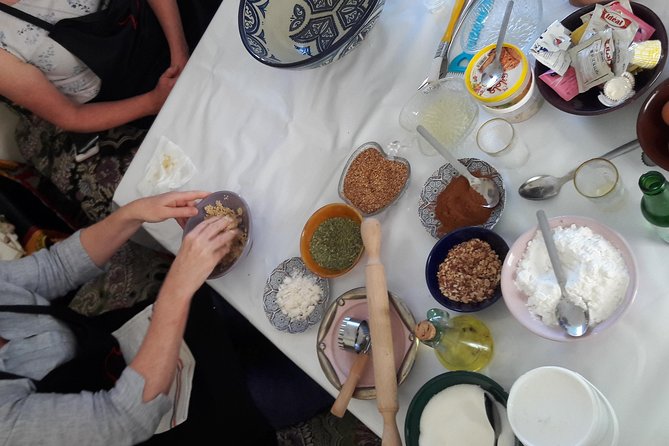
The class emphasizes techniques you can repeat at home. No industrial equipment is needed, and the stated aim is to use items found in an ordinary kitchen. That matters if you want to recreate the food after returning home, rather than learn a recipe that depends on restaurant tools.
Some preparation may be done before you arrive. One account describes the ingredients as already measured, with the work reduced mainly to mixing. That can make the session accessible for families and casual cooks, but it may disappoint you if you expect to measure every ingredient, prepare every filling, and work through a pastry recipe from the first step.
The exact pastries may also vary. The description names corne de gazelle, ghriba, and other Moroccan sweets, while one account describes making two different pastries. If a particular cookie matters to you, ask in advance if the host can include it. The operator has indicated that the chef may try to show you a preferred cookie when requested.
The value of learning mint tea properly
Mint tea gives the class a second skill beyond baking. You learn to prepare the drink that accompanies Moroccan sweets in homes, cafés, and social visits across the country.
That pairing makes practical sense. Pastry is not served in isolation, and the tea helps you understand the rhythm of Moroccan hospitality. You can taste the warm baking with tea or coffee, then repeat the full combination for friends at home.
The class does not promise a separate tea ceremony or a detailed history lesson. Its value is more direct: you make the drink, sit down with the food, and learn how the two belong together. If you have already taken a Moroccan cooking class centered on tagine or couscous, this offers a narrower but useful focus on sweets and serving customs.
Warm pastries and a box for the journey home
The tasting comes after the baking. You eat the pastries while they are fresh from the oven, with tea or coffee, and talk with the host about your time in Morocco.
That warm tasting is one of the strongest parts of the format. You can judge the texture immediately, ask what went wrong if a pastry cracks or dries, and compare the finished result with the method you just learned. It is a better test than taking cold pastries away without knowing how they were made.
You also receive a box of pastry to take home. This is a small but useful extra, particularly if you are staying in Marrakech for several more days or want something to share with family. The box may be harder to protect if you are flying soon, so pack it carefully and do not expect the class to replace proper food packaging for a long journey.
Recipes are included. That turns the session into something more useful than a one-off tasting. You can make the pastries again, though the final result will depend on your shaping, oven, ingredients, and the amount of detail covered during the lesson.
Same city, a very different cup:
- Agafay Desert, 2H of Quad Biking, tea & transfer from Marrakech
★ 5.0 · 55 reviews - Tangier Private Tour with a Local Writer (Includes Tea & Sweet)
★ 5.0 · 52 reviews - Walk to the cascade and marabout of Sidi Mbark & for a tea to Kaouki.
★ 5.0 · 49 reviews - From Agadir/Taghazout: Buggy Safari Adventure & Moroccan Tea
★ 4.3 · 48 reviews
How hands-on is the cooking?
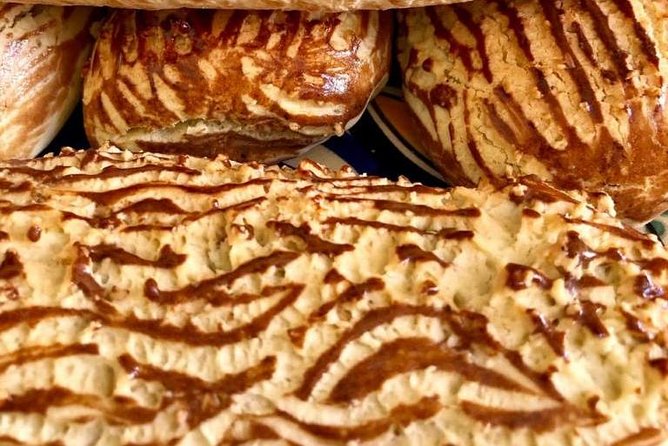
The wording promises a hands-on class, and you should expect to mix, shape, and help create the pastries. Still, the depth of participation may vary with the group and the preparation done before arrival.
The most favorable description points to making two quite different pastries, learning mint tea, and enjoying the warm results. The less favorable assessment found the recipes very easy and noted that ingredients were pre-measured. Both points can be true at once: this is hands-on in a relaxed home-cooking sense, but not necessarily an advanced pastry workshop.
I would choose this class if you want clear methods, an informal setting, and food you can repeat at home. I would look elsewhere if your goal is professional technique, complex laminated dough, detailed decoration, or a long list of recipes.
The class also suits people who prefer learning by doing rather than collecting restaurant recommendations. You can ask about Moroccan ingredients, pastry customs, and food elsewhere in the country during the conversation at the end.
Price, group size, and what you receive
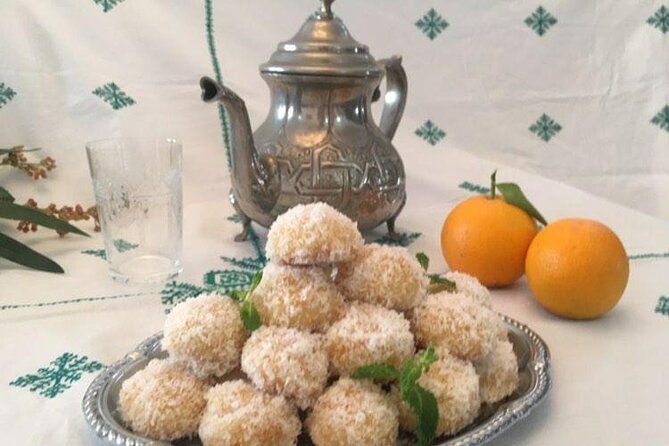
At $40.65 per person, the cost is reasonable for a three-hour class that includes food, drinks, recipes, and a take-home box. The price is easier to justify if you value the private-home setting and the chance to ask questions directly.
You are paying for more than ingredients. You receive an introduction to Moroccan hospitality, instruction in at least two pastry styles, mint tea preparation, a shared tasting, and a practical souvenir. A large commercial class might offer more equipment or a broader menu, but it would not necessarily provide the same home setting.
The maximum group size is 10. That is small enough to feel personal, but it does not guarantee one-to-one instruction throughout. If all 10 places are filled, you may need to share counter space and wait for a turn during shaping or baking.
The class lasts about three hours. That is enough time for a relaxed welcome, pastry preparation, baking, tea, tasting, and conversation. Keep the rest of your schedule light. A cooking class can run at the pace of the kitchen, and rushing away for a tightly timed attraction would undercut the experience.
Several time slots are offered. Choose carefully and confirm the local time. The meeting information must be followed precisely: one booking problem involved arriving an hour late after misunderstanding the time, and the class could not be completed. The operator says a different date or refund was offered in that case, but you should not rely on a late-arrival solution.
Who will enjoy this class most?
This is a good choice for you if you want to:
- Learn Moroccan sweets rather than another savory tagine recipe.
- Meet a local host in a home setting.
- Take part in a relaxed activity lasting about half a day.
- Learn recipes that use ordinary kitchen tools.
- Share the class with family or friends.
- Leave with food and instructions you can use later.
Families may appreciate the simple methods, especially if children enjoy mixing and shaping. The same simplicity could frustrate an experienced baker. The class is also a good rainy-day or hot-afternoon plan, though the stated policy says the activity requires good weather and may be moved or refunded if weather causes cancellation.
It is less suitable if you need hotel pickup, want an advanced technical course, or have a strict diet that the operator has not confirmed. The supplied details do not specify vegetarian, vegan, gluten-free, nut-free, or allergy accommodations, so ask before booking if ingredients matter to you.
Booking and cancellation details to keep in mind
Confirmation is sent within 48 hours, subject to availability. Since the activity is often booked about 11 days ahead, reserving early is sensible if your Marrakech schedule is fixed, particularly for a preferred time slot.
You can cancel for a full refund up to 24 hours before the local start time. Changes or cancellations made inside that 24-hour window are not refunded. The activity may also be canceled if the minimum number of people is not reached, in which case you are offered another date or activity, or a full refund.
Gratuities are optional. Hotel pickup is not included, so transportation to Rue Bab Doukkala is your responsibility. The activity ends back at the meeting point.
Should you book the Marrakech pastry class?
Book it if you want a personal introduction to Moroccan sweets, mint tea, and home hospitality at a fair price. The strongest reasons are the private-home setting, warm pastries, take-home box, recipes, and small maximum group size.
Skip it if you expect a serious pastry-school curriculum or many fully developed recipes. The class appears designed for curious cooks and first-time learners, not for advanced bakers. Before paying, confirm the start time, ask which pastries will be prepared, and mention any dietary needs.
For most people who want a relaxed food experience with something useful to take home, this is a worthwhile three hours in Marrakech.
FAQ
How long does the Moroccan pastry class last?
The class lasts approximately three hours.
Where does the activity begin?
It begins at Rue Bab Doukkala, Marrakesh 40000, Morocco.
Where does the activity end?
The activity ends back at the meeting point.
Is hotel pickup included?
No. Hotel pickup is not included.
What pastries will I learn to make?
The class specifically mentions corne de gazelle and ghriba, along with other Moroccan pastries. The exact selection may vary.
Will I learn how to make Moroccan mint tea?
Yes. Mint tea preparation is included, and you also taste the tea with the pastries.
Are food and drinks included?
Yes. Moroccan pastries and tea are included, with coffee also listed as available.
Do I receive recipes or take-home food?
Yes. Recipes are included, and you finish with a box of pastry to take home.
How many people can join the class?
The maximum group size is 10 people.
Can I cancel for a refund?
Yes. You can cancel at least 24 hours before the local start time for a full refund. Cancellations or changes made less than 24 hours before the start are not refunded.
Fresh tea listings around Morocco
- Agadir/Taghazout: Sandboarding & Sunset Tea with Fire Show★ 5.0 · 6 reviews
- Walk to the cascade and marabout of Sidi Mbark & for a tea to Kaouki.★ 5.0 · 49 reviews
- Walk to the cascade and marabout of Sidi Mbark & for a tea to Kaouki★ 5.0 · 14 reviews
- Visit the Oasis & Tea at the basket maker.★ 5.0 · 8 reviews
- Argan Forest, tea time at a Berbers family & Visit of an Argan cooperative.★ 5.0 · 21 reviews
- Agadir: Quad Bike Safari Desert With Moroccan Tea★ 4.4 · 23 reviews
- Agadir : 2 h Quad biking excursion with moroccan tea★ 4.7 · 26 reviews
- Agadir/Taghazout/Port: Camel Ride Tea & BBQ Option★ 4.3 · 39 reviews
Morocco Tea Tours, compared.
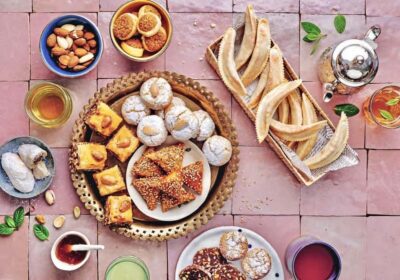
Marrakech: Moroccan Pastries and Tea Class with a Local
Read our review →
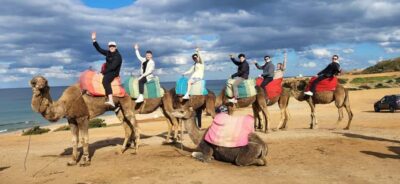
Tangier: sunset, tea, camel ride, Cape Spartel and caves.
Read our review →
Agafay Desert, 2H of Quad Biking, tea & transfer from Marrakech
Read our review →
Tangier Private Tour with a Local Writer (Includes Tea & Sweet)
Read our review →Walk to the cascade and marabout of Sidi Mbark & for a tea to Kaouki.
Read our review →
From Agadir/Taghazout: Buggy Safari Adventure & Moroccan Tea
Read our review →
Agadir/Taghazout/Port: Camel Ride Tea & BBQ Option
Read our review →Browse the lists this tour appears in