
Review · LONDON TEA TOURS
Buckingham Palace, St James Palace & Tea at Kensington Palace
The best part of this experience is the way it links three royal palaces with the streets, parks, memorials, and grand houses between them. You begin in Green Park and finish at Kensington Palace, so the walk gives you a useful sense of how London’s royal quarter fits together rather than treating each palace as an isolated photo stop.
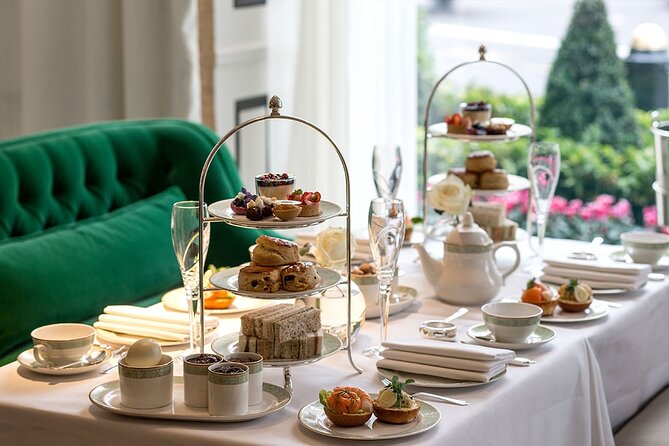
I like the small group size, normally four to six people and never more than 10. I also like the finish: a private table and afternoon tea at the Orangery near Kensington Palace, with finger sandwiches, Welsh scones, clotted cream, jam, and seasonal cakes. The main caution is simple: this is a walking tour, and the palace interiors are not included unless you select entrance at checkout. You see plenty from the outside, but do not expect a full palace visit by default.
Key points to know before booking
- Start with quiet royal London: Green Park and the back streets of St James’s provide more than a quick Buckingham Palace photo.
- Small groups matter: The usual group is four to six people, with a maximum of 10.
- Tea is the grand finale: You finish at the Orangery with a private table and a traditional spread.
- Simon, David, and Tom have led this walk: Their storytelling and ability to explain royal history to different ages are major strengths.
- Palace entry is optional: State Rooms admission must be selected at checkout, and the standard walking tour does not enter the palaces.
- Plan for a bus connection: Bring a contactless card or Oyster card for the approximately £1.75 bus fare.
From Green Park to St James’s royal back streets
The tour begins near Green Park Underground station on Piccadilly. Green Park, once known as Upper St James Park, is a fitting place to start because it puts you in royal territory before you reach the palace gates.
Rather than heading straight into the thickest crowds, your guide takes you toward quieter corners and lesser-used passageways. That approach is useful if you have already seen the usual Buckingham Palace photographs and want a little context around them.
St James’s is the first major historic district on the route. In the seventeenth century, aristocrats, politicians, and the landed elite met in chocolate houses and taverns that later developed into prestigious clubs. The narrow streets still give the area a refined feel, but the point of the walk is not simply to admire polished façades. Your guide explains how this part of London became tied to court life and political power.
The St James’s section is brief, with several stops lasting only five to 10 minutes. That means you should expect focused commentary rather than long visits inside individual buildings. The reward is the larger picture: royal residences, aristocratic homes, clubs, and government connections all sit within a compact part of central London.
More tea experiences around London if you are still choosing
- London: Afternoon Tea Bus Tour – 1960s Routemaster Bus
★ 4.5 · 2,032 reviews - London: Afternoon Tea Bus with a Glass of Prosecco
★ 4.4 · 1,853 reviews - The Kensington Palace Gardens Royal High Tea
★ 4.5 · 934 reviews
Spencer House and the world around St James’s Palace
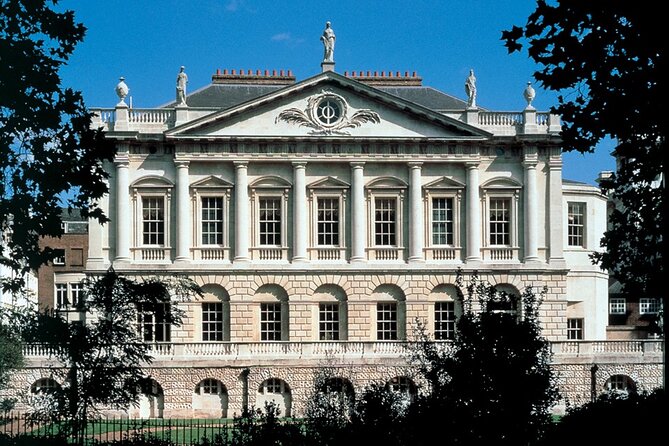
Spencer House makes a useful pause because it brings a famous family name into the story. Built between 1756 and 1766 for John, first Earl Spencer, it is one of London’s finest surviving eighteenth-century town houses. The house was associated with the Spencer family, ancestors of Diana, Princess of Wales.
You will view the building from the outside during this tour. The stop is short, so do not book this expecting a detailed interior visit. Still, it adds texture to the walk. Royal London was not made up only of monarchs and palaces. Powerful families lived close by, built grand homes, and helped shape the social world around the court.
The route then brings you toward The Mall and St James’s Palace. St James’s remains the official London royal palace, though it is not generally open for regular public visits. The Chapel Royal and the Queen’s Chapel can be attended for Sunday services, but those services are not part of this walking experience.
Your guide can help you understand the difference between official status and visitor access. That distinction is important here. A palace can be central to royal life yet offer little public access, so the walking tour provides the practical way to see its setting and hear its story.
Clarence House and Buckingham Palace from the outside
Clarence House was built between 1825 and 1827 to designs by John Nash. It was commissioned for the Duke of Clarence, who became King William IV in 1830. He preferred it to St James’s Palace, which he considered too cramped.
This is the sort of detail that makes the walk more interesting than a sequence of royal names. You learn that royal residences were not interchangeable. Space, comfort, family arrangements, and personal preference all affected where monarchs lived.
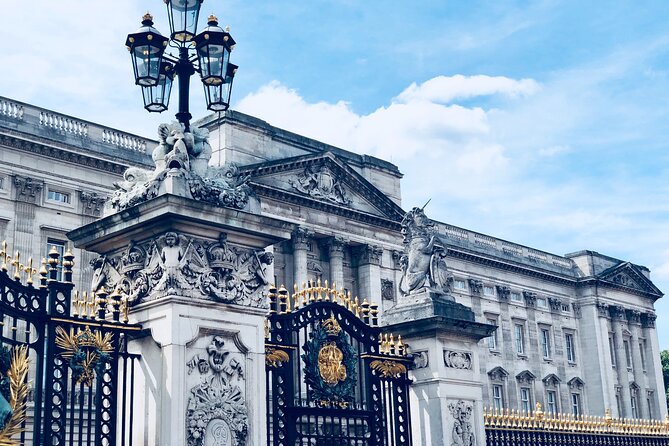
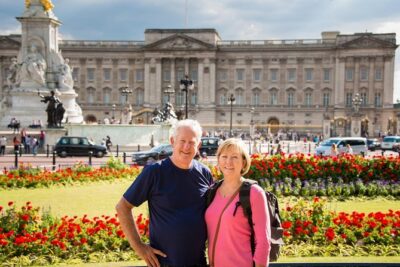
Buckingham Palace follows as one of the headline stops. The site has a much older past than the familiar palace façade suggests. In the Middle Ages, it formed part of the Manor of Ebury, with the River Tyburn running beneath what is now the palace area. Ownership passed through figures including Edward the Confessor and William the Conqueror before the land was connected with Westminster Abbey.
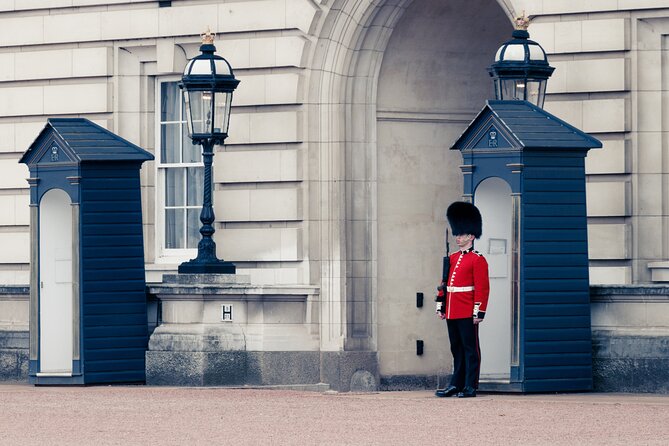
The stop at Buckingham Palace is short, around five minutes. That is enough to orient yourself, hear the main story, and take photographs, but not enough for a full architectural examination. If your main goal is to enter the palace, you need to add State Rooms admission when booking. Without that option, Buckingham Palace is an exterior viewing stop.
This is one of the most important value questions. The tour gives you a guide, a connected royal walk, and tea, but the base price does not automatically include palace interiors. Read the booking choices carefully before paying.
Wellington Arch, Bomber Command, and Apsley House
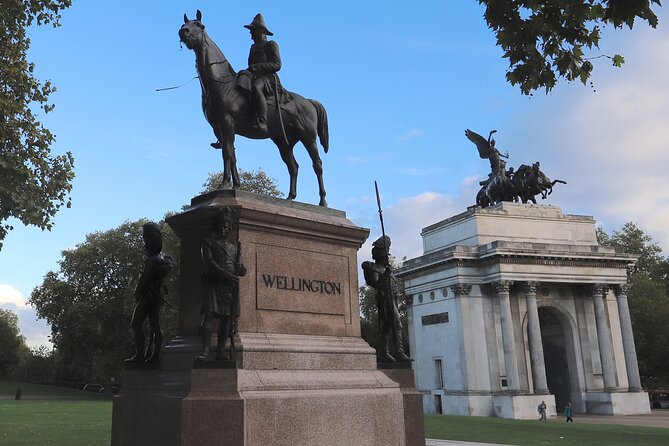
After Buckingham Palace, the route continues toward Wellington Arch. Designed by Decimus Burton in 1828, the arch is topped by a four-horse chariot carrying a figure of Peace, added in 1912. The central passage was reserved for royalty.
Wellington Arch helps shift the story from palace ceremony to national monuments and military memory. Nearby, the Bomber Command Memorial commemorates the crews of RAF Bomber Command who served during the Second World War. The memorial records the sacrifice of 55,573 aircrew from Britain, Canada, Australia, New Zealand, Czechoslovakia, Poland, and other Allied countries, along with civilians killed in raids.
The stop is short, but it gives the tour a more serious note. Royal London is not only about grand entrances and ceremonial guards. It is also tied to war, public service, and national remembrance.
Apsley House adds another layer. Robert Adam built the original red-brick house between 1771 and 1778 for Lord Apsley, the Lord Chancellor. Some Adam interiors survive, including the Piccadilly Drawing Room and the Portico Room, which sits behind the large Corinthian portico added by the Duke of Wellington.
Again, the standard walk views the building rather than providing an interior tour. If you enjoy architectural details, listen closely here. The short explanation about the house’s original design and Wellington’s later changes helps you see why the building looks different from many neighboring town houses.
Same city, a very different cup:
- Afternoon Tea River Cruise on the Thames
★ 4.0 · 884 reviews - London Afternoon Tea Bus with Panoramic Tour
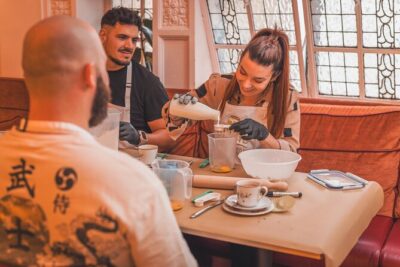
★ 4.0 · 763 reviews - London: Traditional English Scone Making and Tea Workshop
★ 5.0 · 702 reviews - London: Great British Afternoon Tea Bus Tour
★ 4.7 · 616 reviews
Royal Albert Hall and the Albert Memorial
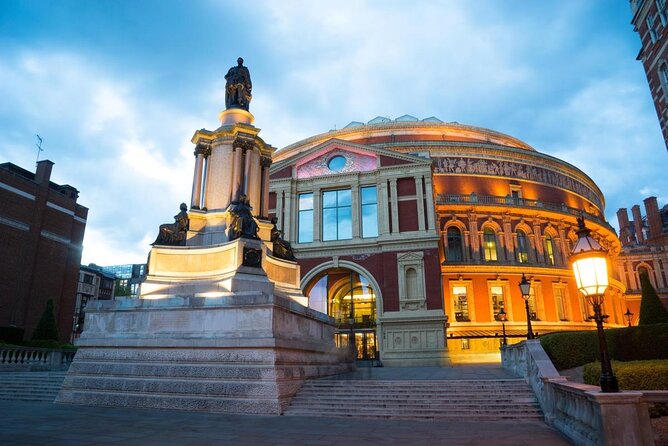
The route then crosses toward South Kensington and the Royal Albert Hall. Opened by Queen Victoria in 1871, the concert hall can seat 5,272 people and has hosted major artists from many kinds of performance.
This stop broadens the tour beyond royal residences. The hall is a working cultural landmark, not simply an old building to photograph. Its connection with Queen Victoria and Prince Albert also prepares you for the next stop, the Albert Memorial.
The Albert Memorial in Kensington Gardens is one of London’s most ornate monuments. It commemorates Prince Albert, who died of typhoid in 1861. The memorial’s elaborate design reflects the public importance Victoria placed on Albert’s life and work.
You will pass through this section on foot, so comfortable shoes are a sensible choice. One person described the walk as not overly athletic, but another specifically advised being ready for plenty of walking. Both points can be true. You do not need to be a serious hiker, but this is not a vehicle tour, and the route covers a sizeable stretch of central London.
Kensington Palace and the story behind the tea setting
Kensington Palace is the final royal landmark. The stop includes palace grounds and historical commentary, with the story of King George II providing one of the more striking details.
On October 25, 1760, George II rose at 6 a.m., drank hot chocolate, and went to his private room. After a loud crash, his valet found him on the floor. The king died before Princess Amelia could reach him. He was nearly 77, and a post-mortem found that the cause was a thoracic aortic dissection.
George II was buried in Westminster Abbey, where he remains the most recent monarch to be buried. He had asked for the sides of his and his wife’s coffins to be removed so their remains could mingle. It is an intimate and unusual detail, and it gives the palace story a human edge.
The walking portion ends at the Orangery, where the afternoon tea takes place. The setting is one of the strongest reasons to choose this tour. You are not simply stopping at a café after a palace walk. You finish in the Kensington Palace area, at a private table arranged for the group.
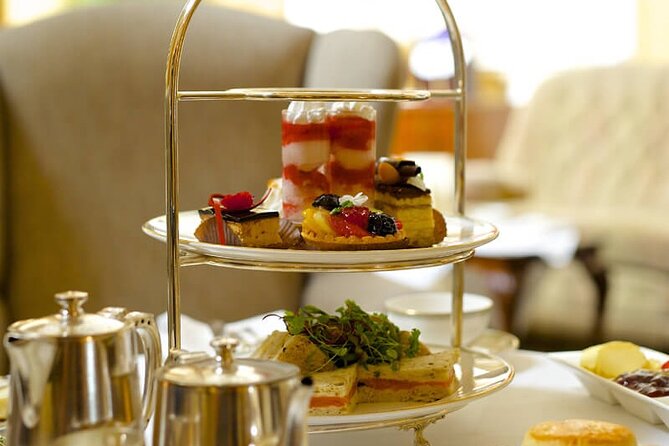
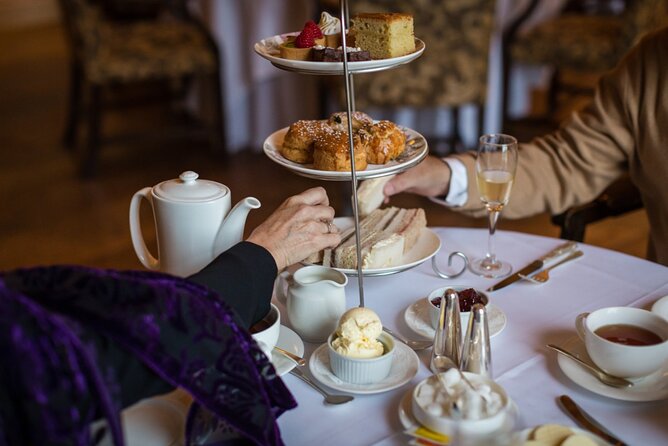
The tea includes delicate finger sandwiches, Welsh scones with clotted cream and strawberry jam, and a selection of cakes that changes with the season. Raisin and plain scones are available. Gluten-free, vegetarian, vegan, and halal choices can be arranged in advance, so state your needs when booking rather than waiting until the day.
One especially memorable detail from the feedback is the chance to have tea served on china associated with Princess Diana. Treat that as a feature that may apply to the venue or service on your date, not as a guarantee that every booking will use the same pieces.
What the guides add to the day
The guide can make or break a walking tour, and this experience has received especially strong praise for its hosts. Simon is repeatedly described as warm, funny, and able to explain the material to different age groups. That matters on a route with many short stops, because a good guide turns a five-minute exterior view into a clear story.
David has also led the walk, with a style that focuses on detail, royal connections, and the meaning of the surrounding buildings. Tom is described as pleasant and full of useful information, with a strong ability to make the tea portion feel like part of the tour rather than an afterthought.
You should not assume a particular guide on a specific date unless the booking confirms it. Still, the recurring strength of the guiding is worth noting. The route includes many names, dates, buildings, and royal relationships. Without a good narrator, it could feel like a long series of façades. With one, the connections become much easier to follow.
The small group helps here. With a maximum of 10 people, you have a better chance to hear the guide, ask questions, and keep the pace personal. The usual group of four to six is an appealing middle ground: more social than a private tour, but far less unwieldy than a large coach group.
Price, transport, and what is really included
At $173.45 per person, this is not a cheap way to see London. The value depends on what you want from the day.
You are paying for a guided royal history walk, a small group, and a full afternoon tea in the Kensington Palace area. You also get a private table, which is a meaningful touch in a city where popular tea venues can feel crowded or difficult to arrange. If you already planned to book afternoon tea and a royal walking tour separately, the combined format may make financial sense.
The price is less attractive if you mainly want palace interiors. Entrance to the State Rooms is not included unless you select it at checkout, and the standard tour does not enter the palaces. Add the admission option if interior access is central to your plans, then compare the total with a dedicated palace visit.
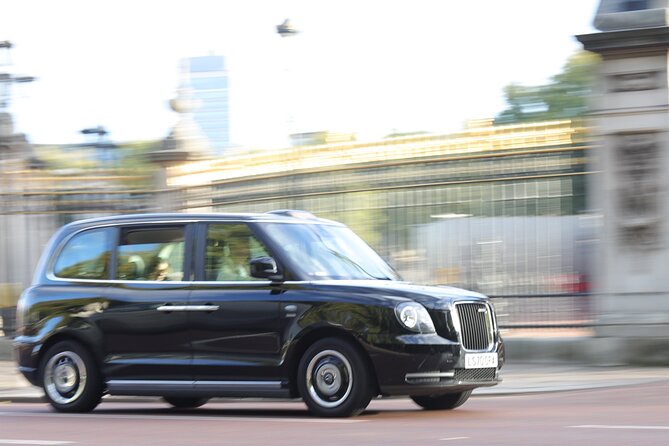
Private transport is not included. The route uses public transport between sections, and you should bring a contactless card or Oyster card for the bus fare, listed as approximately £1.75 per person. The tour ends at Kensington Palace, so you are not returned to Green Park.
The experience is offered in English, with a mobile ticket. Most people can participate, and service animals are allowed. The tour requires a minimum number of bookings, so a cancellation by the operator can result in another date or a full refund.
Free cancellation is available up to 24 hours before the start time. Changes or cancellations inside that window are not refunded, so keep the local cut-off time in mind.
Who should book this royal walk?
I would choose this for a first visit to London when you want a clear introduction to the royal quarter but have limited time. It works particularly well for families and mixed-age groups because the route combines short stops, stories, open-air walking, and a seated meal.
It also suits anyone who values interpretation over simply collecting photographs. The guide explains why St James’s mattered, why Clarence House was preferred by one king, how Wellington Arch fits into the city, and why Kensington Palace carries both royal and personal stories.
You should think twice if you dislike walking, need a very slow pace, or want long interior visits at every palace. The route is not described as strenuous, but it is spread across central London and includes many stops. Visitors who want the Changing of the Guard should also note that this tour does not promise a section of that ceremony.
Should you book it?
Book this tour if you want a compact royal overview with a proper afternoon tea, especially if you prefer a small group and a lively guide. The strongest part is the combination of places that are easy to see separately but more meaningful when connected: Green Park, St James’s, Buckingham Palace, Wellington Arch, Kensington’s museums and monuments, and the palace itself.
Choose another option if your priority is palace entry, a ceremonial guard event, or a shorter route with little walking. For everyone else, the price is reasonable only when you value the guide and tea as much as the sights. Select State Rooms admission if you need it, bring your transit card, request dietary needs ahead of time, and wear comfortable shoes.
FAQ
How long does the tour last?
The listed duration is approximately two hours. The experience includes a walking route from Green Park to Kensington Palace and afternoon tea at the end.
Where does the tour begin?
It begins near Green Park Underground station at Green Park Underground Ltd, Piccadilly, London W1J 9DZ.
Where does the tour end?
The tour ends at Kensington Palace, at the Orangery where the high tea is served.
Are palace interiors included?
No. The standard experience is a walking tour with outside views and historical commentary. Entrance to the State Rooms is available only if selected at checkout.
How large is the group?
The maximum group size is 10 people. The usual group is smaller, often four to six people.
What food is served with afternoon tea?
The menu includes finger sandwiches, Welsh scones with clotted cream and strawberry jam, and a seasonal selection of cakes. Plain and raisin scones are available.
Can dietary requirements be accommodated?
Gluten-free, vegetarian, vegan, and halal options are available with advance notice. A child tea is typically intended for children aged 11 and younger.
Fresh tea listings around London
- Afternoon Tea and Visit to Cutty Sark Ship in London★ 4.5 · 25 reviews
- Taylor Swift-Inspired London Afternoon Tea Bus★ 4.0 · 32 reviews
- London: Afternoon Tea at The Milestone with Champagne Option★ 4.8 · 36 reviews
- London: Tower, Cruise, & Harrods Tea Full-Day Experience★ 4.5 · 33 reviews
- Guided Kensington Palace Tour, Royal Guard Change & Afternoon Tea★ 4.5 · 39 reviews
- Private Tour: Royal High Tea At Kensington Palace Gardens★ 5.0 · 39 reviews
- London: Cutty Sark Entrance Ticket & Afternoon Tea★ 4.6 · 37 reviews
- Christmas Lights Afternoon Tea Bus Tour★ 4.5 · 38 reviews
London Tea Tours, compared.

London: Afternoon Tea Bus Tour – 1960s Routemaster Bus
Read our review →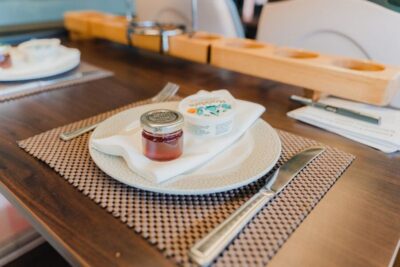
London: Afternoon Tea Bus with a Glass of Prosecco
Read our review →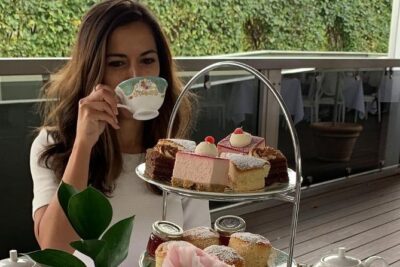

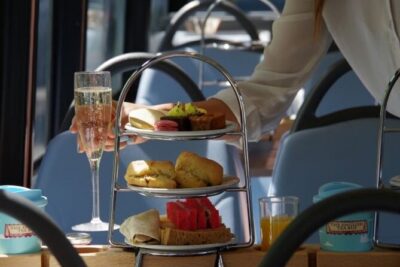
London: Traditional English Scone Making and Tea Workshop
Read our review →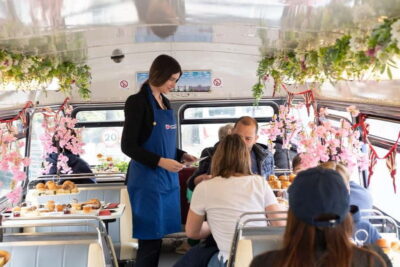
Buckingham Palace & Afternoon Tea Sightseeing Tour with PG Tips
Read our review →Browse the lists this tour appears in